 amigo
Getting around Barcelona: airport transfers, tickets, night transport and bikes
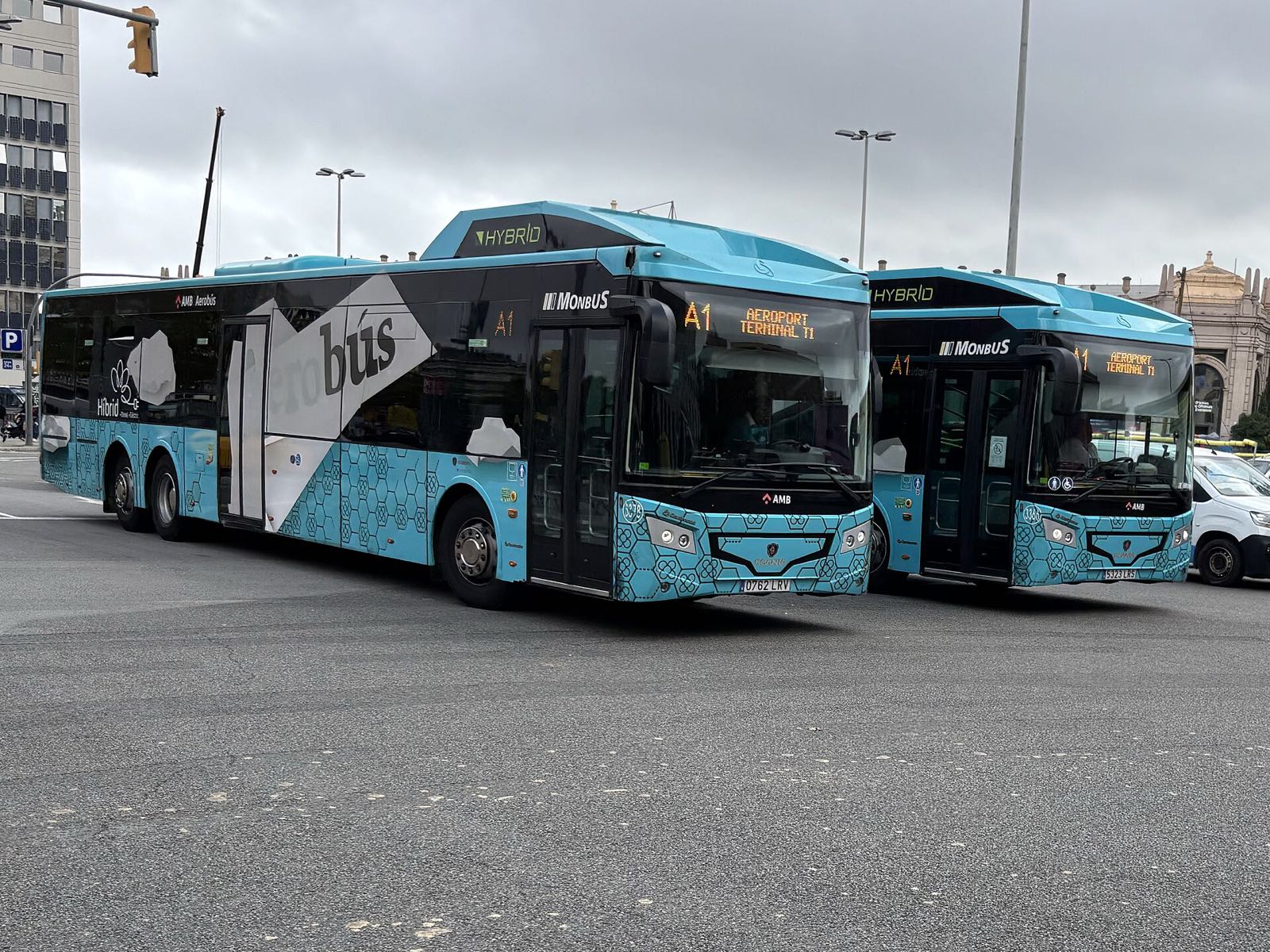
Barcelona is compact, flat where it matters and has one of the easier public transport systems in Europe. The only part that regularly confuses people is the airport, because there are four ways into town and the cheap city ticket does not work on one of them.
All prices below are the 2026 fares we found on operator websites in November 2026. Fares normally change each January.
Airport to city: the four options
Josep Tarradellas Barcelona-El Prat airport has two terminals, T1 and T2, about four kilometres apart and linked by a free shuttle bus. Check which one you are using before you choose your transport.
Aerobús. The blue express bus runs from both terminals to Plaça de Catalunya, stopping at Plaça d'Espanya on the way, every few minutes through the day and in about 35 minutes depending on traffic. The operator lists a single at €7.45 and a return at €12.85 (2026); the return leg can be used up to 90 days after the outward one. It is not part of the city fare system, so travel cards are not valid. This is the simplest choice if you are staying near Plaça de Catalunya or the Gothic Quarter.
Metro L9 Sud. The driverless orange line serves both terminals and runs to Zona Universitària. It does not go to the centre: you change at Torrassa for L1 or Collblanc for L5, and the whole trip takes 45 minutes or more. You need the special airport ticket at €5.90 (2026). The standard single and the T-casual will not open the gates at the airport stations.
Rodalies R2 Nord train. The commuter train leaves from a station beside T2 only, roughly every 30 minutes, and reaches Barcelona-Sants in about 20 minutes and Passeig de Gràcia in about 27. It is the one airport option on which a T-casual journey is valid, which makes it the cheapest way into town. From T1, take the free shuttle to T2 first and allow 15 minutes for it. Rodalies trains are prone to delays, so glance at the departure board before committing.
Taxi. Official taxis are black and yellow and queue outside both terminals. There is no flat fare to the centre. The meter runs, a €4.60 airport supplement is added, and the minimum fare from the airport is €21 (2026). Expect roughly €30 to €40 to the centre depending on time of day and traffic. The one fixed price is €46 between the airport and the cruise terminals at Moll Adossat. Ignore anyone offering a ride inside the terminal.
Which ticket to buy
Almost everything a visitor does is inside zone 1, and the integrated tickets work across the metro, city buses, trams, FGC suburban trains and Rodalies within that zone, with free transfers for 75 minutes.
- Single ticket: €2.90 (2026). Poor value for more than one or two rides.
- T-casual: €13 for 10 journeys in zone 1 (2026). It is personal, so two people need two cards. Not valid at the airport metro stations.
- T-familiar: €11.50 for 8 journeys within 30 days (2026), and it can be shared between people travelling together.
- T-dia: €12 for 24 hours of unlimited travel in zone 1 (2026), including one trip to and one from the airport by metro.
- Hola Barcelona Travel Card: unlimited travel for two to five days, with the 48-hour card at around €18.70 (2026) and a discount for buying online. It covers the metro to and from the airport and the night buses.
Doing the sums
If you are in the city for three or four days and mostly on foot, one T-casual per person is usually enough. If you plan four or more rides a day, or you are arriving and leaving by airport metro, Hola Barcelona works out better. Tickets are sold at machines in every metro station, which take cards and have an English option. None of them covers the Montjuïc cable car or the hop-on tourist buses, though the Montjuïc funicular counts as part of the metro.
Metro, bus and tram
The metro is fast and frequent and will get you within ten minutes' walk of nearly everything. It runs from 5am to midnight from Sunday to Thursday, until 2am on Fridays and the eve of public holidays, and all night on Saturdays.
Buses fill the gaps, notably up to Park Güell, along the seafront and up Montjuïc. Routes prefixed H run horizontally across the grid, V lines run vertically from sea to hills, and D lines cut diagonally. For Tibidabo and the hills behind the city you will use FGC trains from Plaça de Catalunya.
After midnight
When the metro closes, the NitBus network takes over. The yellow night buses run from around 10pm to 5am or 6am depending on the line, and most routes pass through or near Plaça de Catalunya, which makes it the place to head for if you are unsure. Standard tickets and cards are valid. The N17 serves airport T1 and the N16 serves T2, which matters for very early flights.
Taxis are plentiful at night: a green roof light means free. Night and weekend tariffs are higher than weekday daytime ones, but a cross-town ride rarely costs much more than €15. The FreeNow and Cabify apps both work in the city.
Bikes and scooters
The red-and-white Bicing bikes you see docked everywhere are a subscription scheme for residents, not for visitors. Tourists rent from shops, which are thick on the ground in the old town and Barceloneta, or use app-based rental bikes.
Cycling works well here. The Eixample has segregated lanes on most main streets, the seafront path runs flat from Barceloneta to the Fòrum, and drivers are used to bikes. Stay off pavements and out of the narrowest Gothic Quarter lanes, lock the frame to something solid, and never leave a rental bike outside overnight.
On foot
Walking is underrated. From Plaça de Catalunya it is about 20 minutes down La Rambla to the port, 15 minutes up Passeig de Gràcia to La Pedrera, and 15 minutes across the old town to El Born. The Eixample blocks are long, so distances on the map are bigger than they look: the Sagrada Família is a 35-minute walk from the Gothic Quarter, and a five-minute metro ride.
One orientation trick saves a lot of map-checking. Locals give directions as mar (sea) or muntanya (mountain). The hills are always uphill and inland, the sea always downhill.