 amigo
Six day trips from Barcelona by train: Montserrat, Girona, Sitges, Tarragona, Figueres and the Costa Brava
Three days is enough to see Barcelona's headline sights. With a fourth or fifth, get out. Within an hour or so by train there is a mountain monastery, a walled medieval city, a Roman capital, a beach town and the strangest museum in Spain.
Journey times below are for the trains we would actually take. Two warnings first. High-speed tickets are priced like flights, so book ahead for the cheap ones. And the Rodalies commuter network is prone to delays and engineering works, so check the operator's app on the morning.
Montserrat
The serrated mountain 50 kilometres inland, with a Benedictine monastery wedged halfway up, is the classic day out and the subject of its own page in our guide: see Montserrat.
Take the FGC R5 train from Plaça d'Espanya, which runs about once an hour and takes roughly an hour. You then choose how to go up. Get off at Montserrat-Aeri for the cable car, or stay on one more stop to Monistrol de Montserrat for the rack railway. The two are separate stations with separate tickets, so decide before you buy. Allow about 90 minutes door to door.
Combined tickets covering the train and the ride up are sold at Plaça d'Espanya and start in the low €20s return (2026), rising if you add the funiculars and the museum. Go early: the basilica and the Black Madonna queue are at their quietest before 10.30am. Take a layer, since it is noticeably cooler at 700 metres, and walk at least as far as the Sant Miquel cross for the view back to the monastery.
Girona
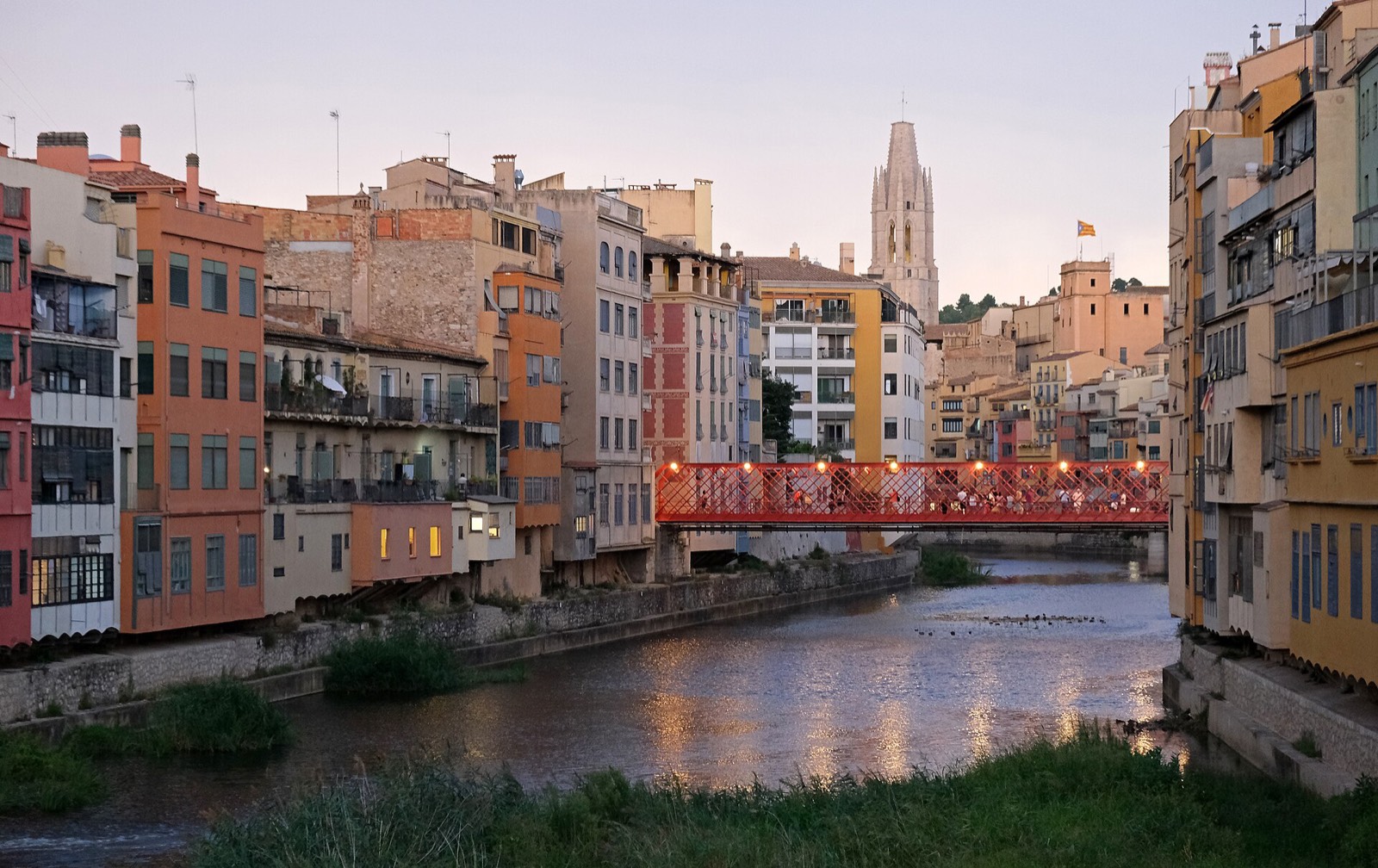
Girona is the best city day trip in Catalonia: a compact old town climbing a hill above the river Onyar, with painted houses over the water, one of the best-preserved medieval Jewish quarters in Europe and a cathedral with a vast single nave at the top of a monumental staircase. You can walk a long stretch of the city walls.
High-speed AVE and Avant trains from Barcelona-Sants take about 38 minutes, and there are around two dozen trains a day in total. Booked ahead, fares start from around €8 each way (2026) and climb sharply close to departure. Slower regional trains from Sants and Passeig de Gràcia take well over an hour but cost a fixed, modest price. The station is a 15-minute walk from the old town.
Have lunch here. Girona takes its food seriously and set menus are better value than in Barcelona. Most museums close on Mondays.
Figueres and the Dalí Theatre-Museum
Salvador Dalí built his own museum in the ruins of his home town's theatre, topped it with giant eggs and is buried under the stage. It is funny, excessive and unlike any other gallery, and it is the reason to come to Figueres.
The fast trains from Barcelona-Sants reach Figueres-Vilafant in about 55 minutes, on the same line as Girona. Vilafant station is on the edge of town, a 20-minute walk or a short bus ride from the museum. Regional trains arrive at the more central Figueres station but take about two hours.
Book a timed museum ticket online before you travel, since same-day slots sell out in summer, and check the opening days: outside high season it is closed on most Mondays. Girona and Figueres are 15 minutes apart by fast train, so an energetic day can cover both. Do Figueres first, then stop in Girona for the afternoon and dinner.
Sitges
The easiest trip of all. Rodalies R2 Sud trains from Sants and Passeig de Gràcia reach Sitges in about 40 minutes, run several times an hour and take ordinary multi-zone commuter tickets, with no booking needed.
Sitges is a whitewashed seaside town with a baroque church on a headland, a long promenade, small sandy beaches and a famously relaxed attitude. It has been a gay holiday destination for decades and hosts a big carnival in February and a fantasy film festival in October. The Cau Ferrat and Maricel museums, in the old artists' houses by the sea, are worth an hour. It also works in winter, when it is often sunnier and milder than Barcelona.
Tarragona
Tarragona was Tarraco, capital of Roman Spain, and it shows: an amphitheatre on the beach, a circus buried under the old town, stretches of city wall and an aqueduct in the woods outside. The Roman ensemble has been a UNESCO World Heritage Site since 2000, and a combined ticket covers the main monuments.
The choice of train matters here. High-speed services take a little over 30 minutes but stop at Camp de Tarragona, a station in the countryside about nine kilometres out, with a bus or taxi needed to finish the journey. Regional trains from Sants and Passeig de Gràcia take around an hour and ten minutes and arrive at Tarragona's own station, right below the old town and next to the sea. For a day trip, take the regional.
Walk up the Rambla Nova to the Balcó del Mediterrani viewpoint, do the amphitheatre and the circus, and eat fish in the Serrallo fishing quarter.
The Costa Brava
The wild coast begins at Blanes and runs to the French border. It deserves a few days and a car, but a taste is possible in one.
Tossa de Mar is the best target by public transport. Direct buses run from Estació del Nord in Barcelona and take from about 1 hour 20 minutes to two hours. You get a walled old town on a headland, a main beach right below it and a couple of smaller coves a short walk away. Blanes is reachable on the R1 train in roughly an hour and a half and has boats along the coast in season.
If you hire a car, aim for the stretch between Palamós and Begur, about an hour and three quarters from Barcelona. Calella de Palafrugell, Llafranc and Tamariu are linked by a coastal footpath, the Camí de Ronda, and the walk between the first two takes 20 minutes.
Which to choose
If you have only one spare day, the short version is this.
- For scenery and a walk: Montserrat.
- For history, food and atmosphere: Girona.
- For art: Figueres, ideally paired with Girona.
- For a lazy day on the beach: Sitges.
- For Roman ruins without crowds: Tarragona.
- For swimming in clear water: the Costa Brava, with a car if you can.