 amigo
Is Barcelona safe? Pickpockets, scams and what to do if you are robbed
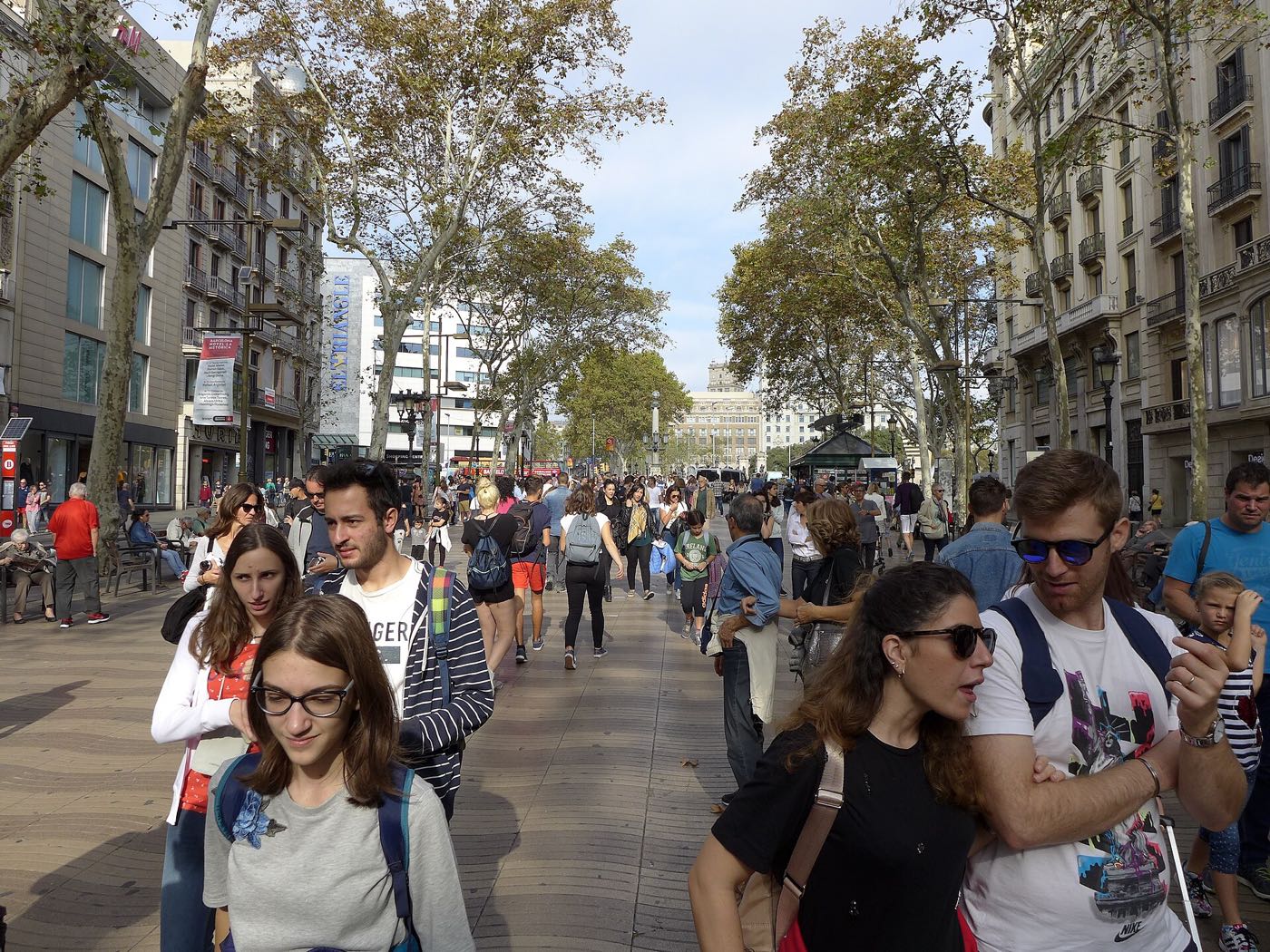
The honest answer is yes, with one large caveat. Violent crime against visitors is uncommon and most people walk around at all hours without trouble. What Barcelona does have is a lot of theft: quiet, skilled and aimed squarely at people who look as if they are on holiday.
The trend is improving. Reporting based on police data put thefts in the city at about 239 a day in 2025, down from 258 in 2024, and the transport operator TMB reported 34% fewer crimes on the metro in the first half of 2026 than a year earlier. That is still a lot of phones. A few habits remove most of the risk.
Where it happens
Theft follows crowds. The old town district, Ciutat Vella, accounts for a large share, and the same places come up again and again.
- La Rambla and the streets either side, especially around street performers and at the Boqueria entrance.
- The narrow lanes of the Gothic Quarter and the lower Raval late at night.
- The metro, above all at Plaça de Catalunya, Sants Estació, Passeig de Gràcia and Sagrada Família, and on escalators and at carriage doors.
- The queues and pavements around the Sagrada Família and Park Güell.
- Barceloneta beach and the seafront, where bags left on a towel disappear while you swim.
- Restaurant and café terraces anywhere central, where a phone on the table or a bag on a chair back is the target.
How pickpockets actually work
They work in teams of two to four and they look like everyone else: well dressed, often carrying a map, a jacket over one arm or a shopping bag to cover the hand. One blocks or distracts, one takes, one carries the item away within seconds.
On the metro the classic move is a bottleneck at the doors. Someone stops dead in front of you as you board, someone presses from behind, and the doors close with you inside and your wallet on the platform. On escalators, the person ahead drops something and bends down at the top.
Common scams and distractions
None of these is dangerous. All of them exist to put a stranger's hands near your pockets or to separate you from your bag for five seconds.
- The stain. Someone points out bird mess or sauce on your shoulder and helps wipe it off. Keep walking and clean up later.
- The petition. A clipboard is pushed under your nose, covering your bag or the phone on your table. Say no and step back.
- The football trick. A cheerful stranger wraps a leg around yours to show off a move, usually late at night near the bottom of La Rambla.
- The shell game. The winners in the crowd are part of the team, and so are the people standing behind you.
- Fake police. Plain-clothes officers do exist, but real ones do not ask to inspect your cash or cards in the street. Offer to walk to a police station.
- The flat tyre. On motorways around the city, a driver signals that something is wrong with your hire car. Stop only at a staffed service area and lock the doors.
- Beach sellers and masseurs. Mojitos from a bucket and unrequested shoulder rubs are best declined.
Habits that work
You do not need a money belt and a padlock. You need to be slightly more awkward to rob than the next person.
- Phone in a front pocket or a zipped bag, never the back pocket and never on a café table.
- Bag worn across the body and in front of you on the metro and in crowds. Backpacks go on your chest in a packed carriage.
- On terraces, loop a strap around your leg or the chair leg.
- Carry one card and a little cash. Leave the passport, the spare card and most of the money in the hotel safe, and keep a photo of your passport on your phone.
- Write down your phone's IMEI number (dial *#06#) and switch on its find-my-device feature before you travel.
- At the beach, take only what you would not mind losing, or swim in turns.
Nights out
The areas around clubs are busy and generally fine, but drunk people are easy targets. Thefts from people walking home alone through the lower Raval and the Barceloneta seafront in the small hours are a known pattern, and expensive watches attract a more forceful kind of thief. Leave the watch at home, keep your drink in sight and take a licensed black-and-yellow taxi or the night bus if you are tired.
What to do if you are robbed
First, if anyone is hurt or you are in danger, call 112. It is the free emergency number for police, ambulance and fire, and operators can take calls in English.
Second, block things. Freeze your bank cards in your banking app or by phone, mark your phone as lost so it locks, and call your network to block the SIM.
Third, report it. You will need a police report, called a denuncia, for any insurance claim and for an emergency passport. The Catalan police, the Mossos d'Esquadra, handle crime reports. Their Ciutat Vella station is at Carrer Nou de la Rambla 76-78, a few minutes from La Rambla, and queues can be long at weekends. The city police, the Guàrdia Urbana, run a tourist assistance service with translation at La Rambla 43.
For a theft without violence where you cannot identify the thief, you can also start the report on the Mossos website. It only becomes valid when you sign it in person at a police station within 72 hours, so do it before you fly home. Anything involving force or threats has to be reported in person. Some hotels can help guests file a report under an agreement between the hotel association and the police; ask at reception.
Bring identification if you still have it, the IMEI for a stolen phone, and serial numbers or receipts for anything valuable. Ask for a copy of the report in a language you can read.
If your passport has gone, contact your country's consulate in Barcelona with the police report. Most can issue an emergency travel document within a few working days, so do not leave it until the morning of your flight.
Keep it in proportion
Millions of people visit every year and go home with everything they arrived with. Barcelona's streets are busy late into the night, which is itself a form of safety. Treat your phone the way locals do, which is to say a little suspiciously, and get on with enjoying the city. For getting home after dark, see our transport notes in the articles section.