La Rambla
- Address
- La Rambla, 08002 Barcelona (Plaça de Catalunya to the Columbus Monument)
- Metro
- Catalunya (L1, L3), Liceu (L3) or Drassanes (L3)
- Price
- Free
- Hours
- Always open
- Links
- Official website · Open map
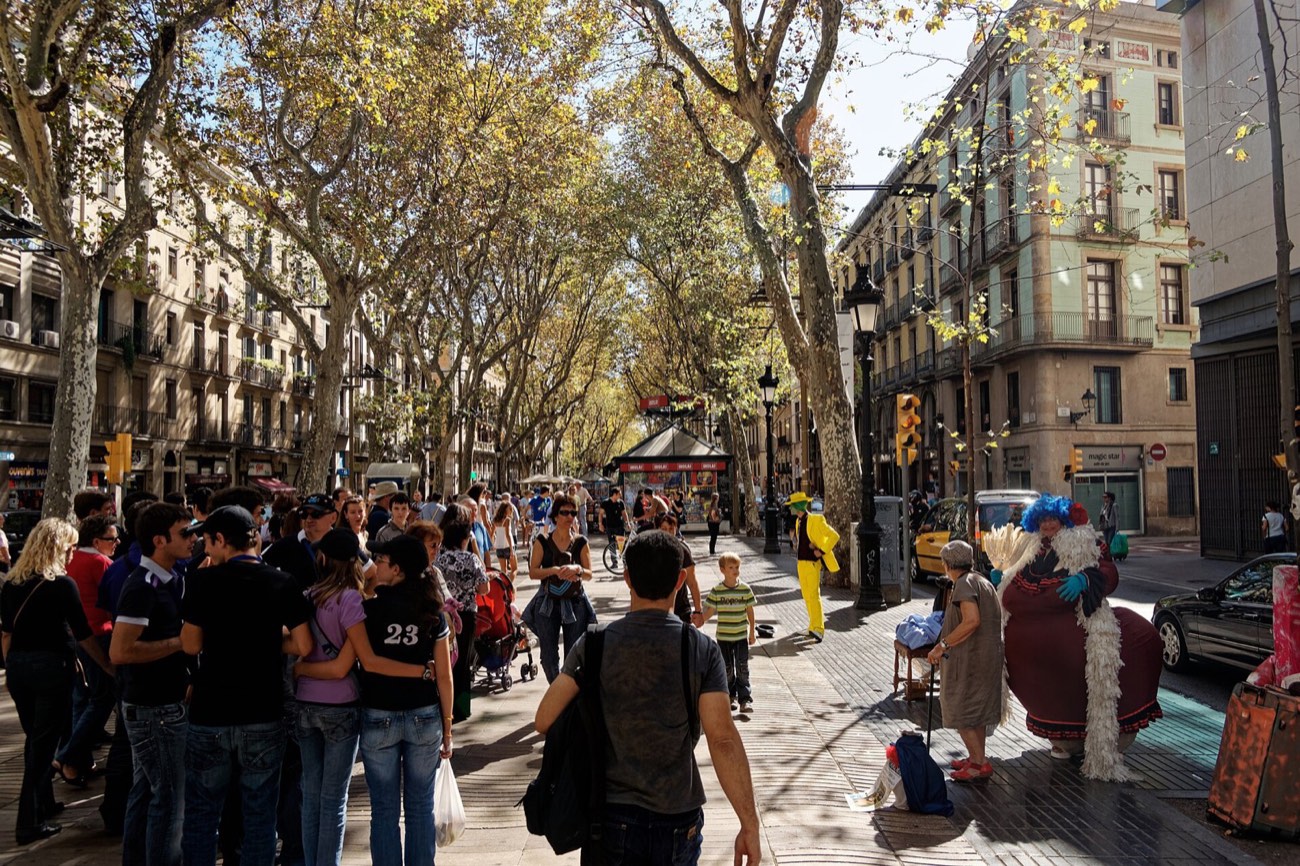
La Rambla follows the line of a seasonal stream that ran outside the medieval walls. When the walls came down it became the city's promenade, a broad central walkway under plane trees with traffic squeezed down either side. For two centuries it was where Barcelona came to stroll, buy flowers and be seen. Today most of the people on it are visitors, and locals tend to cross it rather than walk it. It is still worth doing once, top to bottom, with your expectations set correctly.
The street is nearing the end of a long redevelopment that widens the pavements, cuts traffic and repaves the whole length. The city says the work will be finished by February 2027, with an opening celebration planned for the weekend of 13 and 14 February. Until then, expect fenced-off stretches and some detours in the central section.
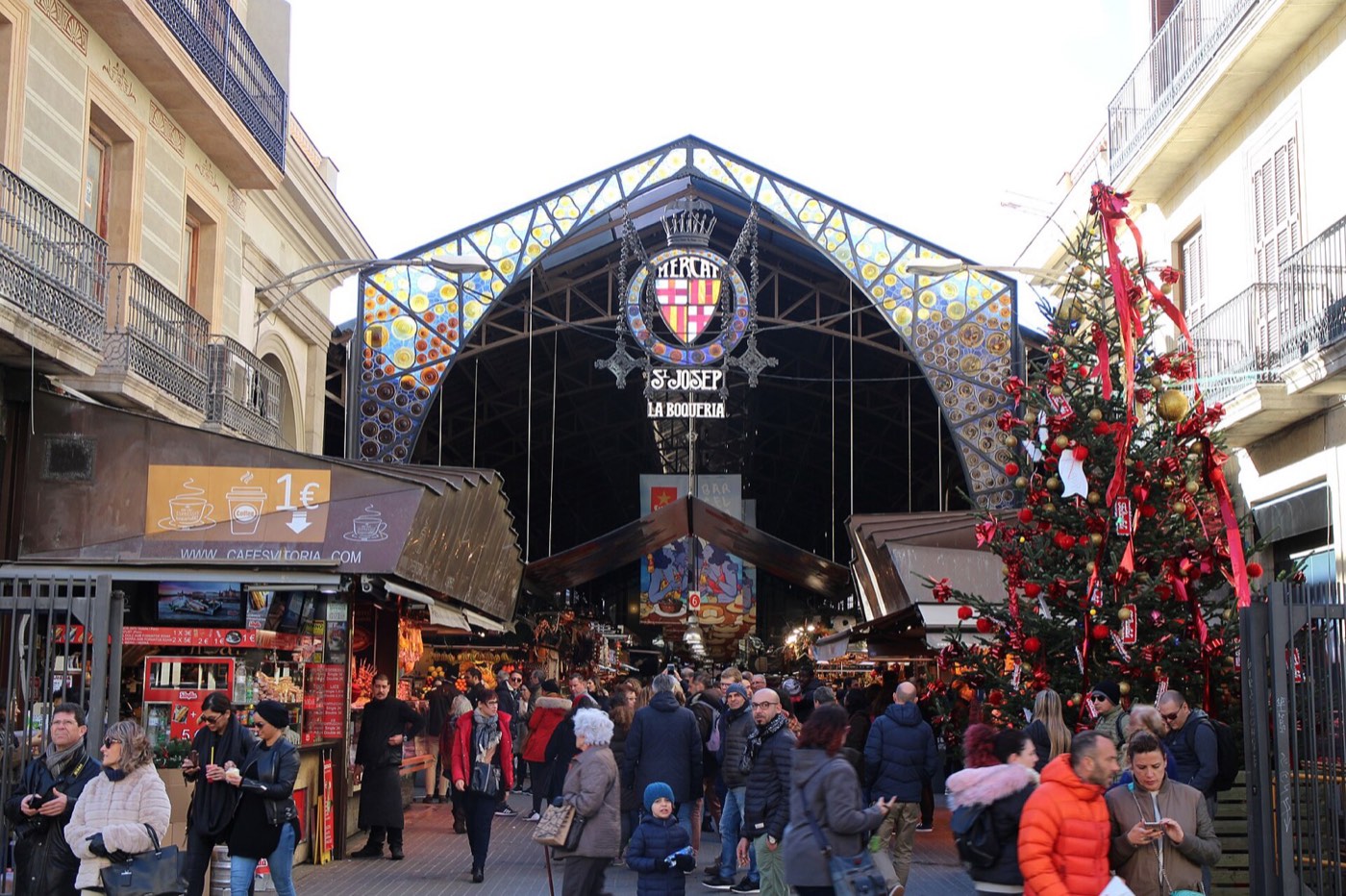
Starting at the top, the Canaletes fountain is where Barça fans gather to celebrate titles. Further down are the Baroque church of Betlem and the Palau de la Virreina, which houses a free photography and image centre. Halfway along is the entrance to La Boqueria market and, set into the pavement, a circular mosaic by Joan Miró that most people walk over without noticing. Opposite stands the Gran Teatre del Liceu, the city's opera house.
The lower half gets scruffier. An archway on the left leads into the arcaded Plaça Reial; a few steps down Carrer Nou de la Rambla on the right is Palau Güell, an early and rather dark Gaudí mansion. The walk ends at the Columbus Monument, a 60-metre column you can go up by lift, and the waterfront of Port Vell.
Walking the full length takes 20 to 30 minutes without stops. Early morning is the best time, when the flower kiosks are setting up and the paving is being hosed down. Late at night the lower end attracts drug sellers and prostitution and is not pleasant.
Three rules. Do not eat or drink at the terraces on La Rambla itself, where prices are high and quality is low; walk two streets into the Raval or the Gothic Quarter instead. Do not play the shell game or stop for anyone offering petitions or bracelets. And keep your phone and wallet in a front pocket or a closed bag, because this is the pickpocketing capital of the city.
Why go
- It connects everything. The Gothic Quarter, the Raval, La Boqueria and the port all open off it.
- The Liceu and the Miró mosaic. Two genuine landmarks in the middle stretch.
- Early mornings. Before 9:00 it still feels like a neighbourhood street.
- A new look. From early 2027 the rebuilt boulevard will have more room for pedestrians.
 Keep in mind
- Pickpockets. Treat every crowd, performer and distraction as a risk to your phone.
- Works until February 2027. Parts of the street are still fenced off in late 2026.
- Bad-value terraces. The restaurants and bars on the boulevard itself are best avoided.
- Seedy late at night. The lower end towards the port is uncomfortable in the small hours.