Bunkers del Carmel (Turó de la Rovira)
- Address
- Carrer de Marià Labèrnia, s/n, 08032 Barcelona
- Metro
- Alfons X (L4) or El Carmel (L5), then a steep 15-minute walk; bus 119 stops near the top
- Price
- Free
- Hours
- Daily 9:00–19:30 (May–Sep), 9:00–17:30 (Oct–Apr); fenced and locked outside these hours
- Links
- Official website · Open map
Everyone calls them the Bunkers del Carmel, but there are no bunkers and the hill is not quite in El Carmel. The Turó de la Rovira is a 262-metre summit in the Can Baró neighbourhood where the Republican government built an anti-aircraft battery in the late 1930s to defend the city from Italian and German bombers. What survives are the concrete gun platforms, the command post and the troop quarters.
The second chapter is as interesting as the first. After the war, people arriving from the rest of Spain with nowhere to live built shacks in and around the abandoned battery. The settlement, known as Els Canons, lasted until 1990. Look down as you walk: patches of domestic floor tile are still set into the ground where kitchens and bedrooms once stood. The History Museum of Barcelona runs a small free exhibition in the old military rooms on Wednesday, Friday, Saturday and Sunday, from 10:00 to 14:00 between October and May.
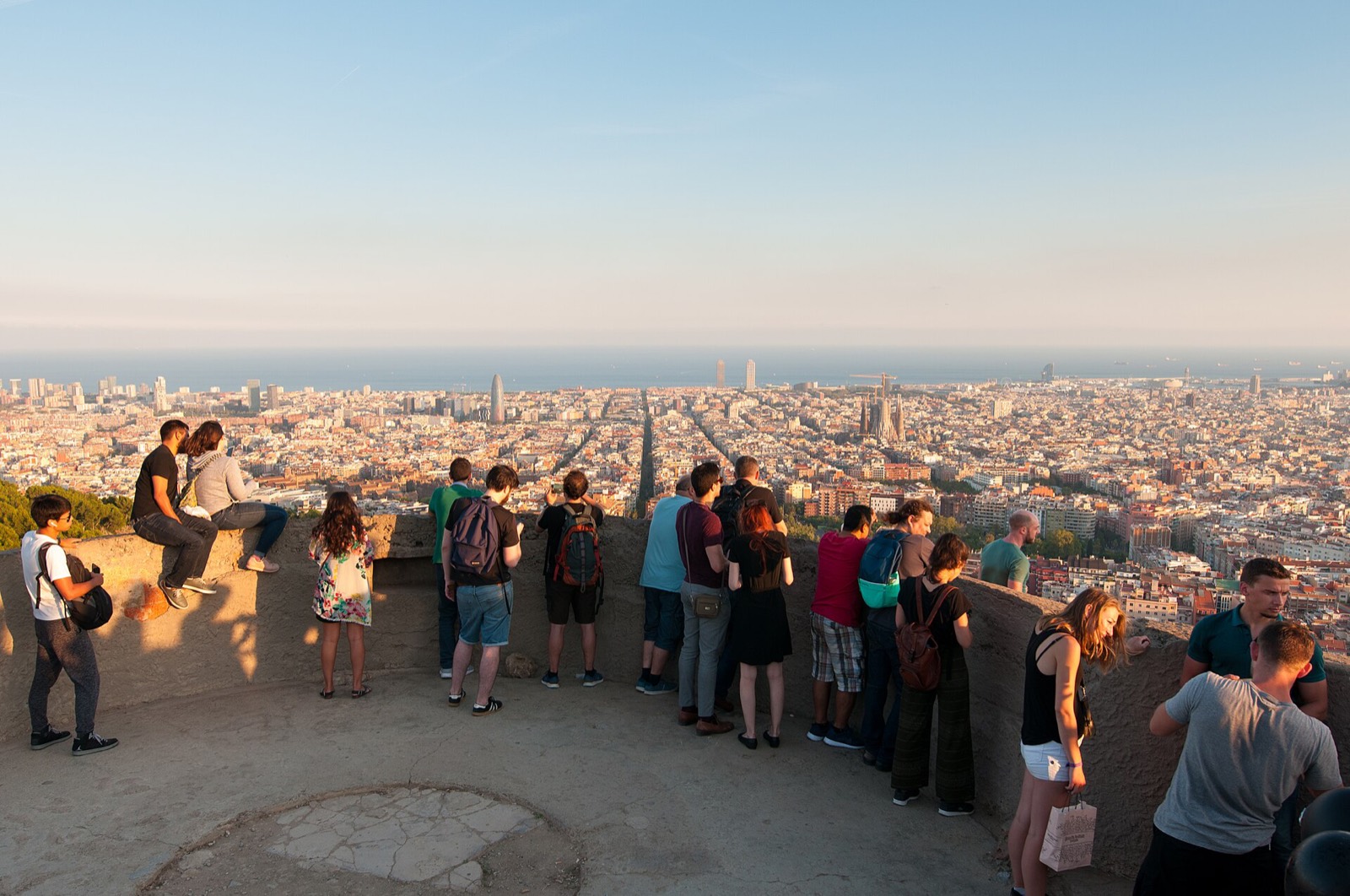
Then there is the view. From the platforms you see the whole city in the round: the Sagrada Família rising out of the Eixample, the towers at the port, Montjuïc, Tibidabo behind you and the sea across the horizon. Nothing else in Barcelona gives you this for free.
Now the restrictions, because guidebooks and social media are years out of date. For a decade this was where half the city's visitors came to drink at sunset, and neighbours had had enough of the noise and rubbish. In May 2023 the council fenced the entire summit and began locking the gates each evening. In 2026 the enclosure is open daily from 9:00 to 19:30 between May and September and from 9:00 to 17:30 for the rest of the year. Police clear the area at closing time and have fined people for climbing the fence. Drinking alcohol on the hill can also earn a fine.
In practice this means no summer sunsets from the top, since the sun sets well after 19:30, and no sunrise either. From November to January the sun goes down close to closing time, so a winter afternoon gets you the low golden light. Otherwise come in the morning, when the light on the city is good and you may share the platforms with a dozen people rather than several hundred.
Getting there involves a climb. Bus 119 goes closest to the top. From Alfons X or El Carmel metro it is around 15 minutes uphill on steep streets and stairs. There is no shade, no café and no toilet at the summit, so bring water. Allow an hour up there.
Park Güell is about 20 minutes away on foot along the ridge, and the two fit naturally into one morning. Remember that people live on the streets you walk through, and keep the noise down.
Why go
- 360-degree view. The most complete panorama of Barcelona, and it is free.
- Real history. Civil War gun emplacements and the traces of a vanished shanty town.
- Morning calm. Early visits are quiet and the light on the city is at its best.
- Pairs with Park Güell. A 20-minute walk links the two.
 Keep in mind
- Closing time. Gates are locked at 19:30 in summer and 17:30 in winter, so summer sunsets are not possible.
- Enforcement. Police clear the site, and climbing the fence or drinking alcohol can mean a fine.
- Steep access. The final approach is a stiff uphill walk with no shade.
- No facilities. No toilets, water or café at the top.